Where to Take an Old Appliance in Wilson County
You have a few real options, and the right one depends on the appliance and whether it still runs.
Most household junk can go straight to a Wilson County convenience center. Appliances are the exception. They come with their own handling and a fee.
- A Wilson County convenience center. Open to county residents, and appliances carry a disposal fee.
- A scrap-metal yard. An old appliance is mostly steel, so a scrapper will usually take it off your hands.
- A junk-removal crew. The truck comes to the house, the unit gets unhooked and carried out, and it lands at the right place.
- Donation, if it still runs. A working washer or fridge can go to a charity resale instead of the scrap pile.
The unit that gives people the most trouble is the one that cools. That is the next thing to sort out.
Why Fridges, Freezers, and AC Units Are Different
Anything that cools has refrigerant sealed inside, and that changes how it is allowed to be thrown out.
Federal law is specific here. The EPA's Clean Air Act Section 608 requires the refrigerant in a refrigerator, freezer, window air conditioner, or dehumidifier to be recovered with certified equipment before the unit is scrapped, and the disposer has to document that it was done.
That is why a fridge is never a curbside item, and why the county handles it differently from an old bookshelf. The freon has to be pulled by someone set up to do it.
Venting refrigerant is illegal, so a recycler or a hauler takes care of the recovery as part of accepting the unit. It is not a step you get to skip.
The rule exists for a reason. Refrigerants are potent greenhouse gases when they escape, so the EPA tracks their recovery from the moment an appliance is pulled from service.
What Each Appliance Needs Before It Goes
Each appliance has its own quirk, and knowing it before pickup day saves a mess.
A few things apply across the board: cut the power or gas first, empty the unit out, and clear a straight path to the door so nothing gets dragged across a wall.
- Refrigerators and freezers. Empty and defrost them a day ahead so they are not leaking water across the floor when they move. They hold refrigerant, so they follow the freon-recovery route, never the curb.
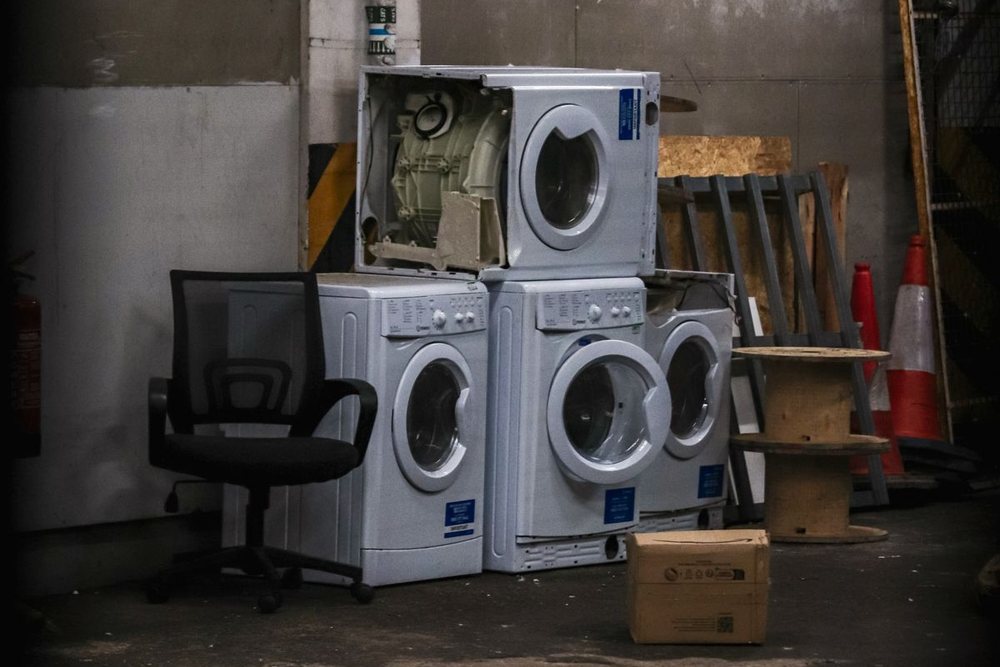
- Washing machines. Shut the hot and cold valves, disconnect the supply hoses, and drain the lines. A washer holds more standing water than people expect.
- Dryers. An electric dryer unplugs and goes. A gas dryer has a gas line that has to be shut off and disconnected first, which is the part most people would rather hand off.
- Stoves and ranges. Electric ranges pull from a 240-volt outlet; gas ranges need the gas shut off and the line capped. Many sit in an anti-tip bracket screwed to the floor that has to come loose.
- Water heaters. Drain the tank first, or you are carrying forty-plus gallons of water out the door. Gas units need the gas and flue disconnected, electric units need the breaker off.
- Dishwashers. These are usually hardwired and plumbed in under the counter, so they get disconnected from the water, drain, and power before they slide out.
- Microwaves. A microwave is e-waste, not regular trash, because of the electronics inside. Over-the-range units also have to be unmounted.
If a step on that list runs into gas or hardwiring you would rather not touch, that is the point where most people stop and call for the lift.
What the County Will and Won't Take
Wilson County's convenience centers are for county residents. You need a Wilson County vehicle tag to drop anything off.
They take ordinary household waste at no charge, but appliances, electronics, and tires carry a fee. The county landfill recycles scrap metal and e-waste, the computers, printers, and televisions most people do not know what to do with.
The city does not fill the gap. Mount Juliet runs a brush and chipper route, not a bulk-appliance pickup, so a dead dryer set out at the road just sits there.
None of that makes self-haul wrong. It just means an appliance is a planned trip with a tag and a fee, not something you wheel to the curb on a Tuesday.
Can You Donate It Instead?
If the appliance still runs, donating it keeps a working unit out of the scrap pile.
Wilson County has a real outlet for this. The Habitat for Humanity ReStore reopened in 2024 at the former Lebanon Premium Outlets on Granville Drive in Lebanon, and it takes working appliances, furniture, and building materials, with the proceeds going toward local home builds.
Two honest caveats. A resale store only wants units that actually work, it will rarely take anything with refrigerant unless the unit is recent, and you usually have to get it there yourself. For a dead fridge or a leaking water heater, scrap or haul-away is the realistic path.
What Happens to a Scrapped Appliance
Most of an old appliance gets recycled, not buried.
About 75 percent of a typical household appliance's weight is steel, and a refrigerator ten years or older holds more than 120 pounds of it, according to the American Iron and Steel Institute. That metal is shredded and melted down into new steel.
The rest gets pulled apart where a recycler is equipped for it. The refrigerant is captured, the compressor and wiring are stripped for their metal, and the glass and plastics are separated out.
The refrigerant and the foam insulation inside an old fridge are the parts that matter most environmentally, since both trap far more heat than carbon dioxide. The EPA runs a Responsible Appliance Disposal program specifically so those are captured rather than vented into the air.
When It's Easier to Call a Hauler
If the appliance is heavy, wired in, or one of the units with refrigerant, a hauler is usually the least painful route.
We unhook it, carry it out without gouging your floors or door frames, and route each piece where it belongs, the refrigerant recovery, the scrap metal, the e-waste. No tag, no fee at a gate, no carloads with a tarp over the back seat.
Our appliance removal service covers washers, dryers, stoves, water heaters, and refrigerators across Mount Juliet and the rest of Wilson County. Good-condition pieces we keep out of the landfill where we can.
Got an old appliance you want gone? Call (615) 701-6608 and we'll handle the lift, the haul, and the disposal in one stop.