Why Storm Readiness Stays on the Mind in Mount Juliet
Spring in Middle Tennessee arrives with a temper. Warm Gulf air collides with cooler systems pushing down from the north, and the result is a stretch of weeks where severe thunderstorms, straight-line winds, and the occasional tornado are simply part of the season. Wilson County sits squarely in that path, and most longtime residents can name a storm that rearranged their street.
The one people still talk about is the EF-3 tornado that tore across this area in the early hours of March 3, 2020. It crossed North Mount Juliet Road and damaged several local schools, including West Wilson Middle, Stoner Creek Elementary, and Mount Juliet Christian Academy. Nobody who lived through that morning forgets how fast a familiar landscape can turn into a debris field. That memory is exactly why families here keep debris readiness somewhere in the back of their minds, even on calm days.
Knowing what to do with the aftermath is half the battle. A yard full of broken limbs and torn building material looks overwhelming, but it sorts into a few clear categories, and each one has a sensible path off your property.
What Actually Counts as Storm Debris
Storm debris is not one thing. It falls into two broad streams, and telling them apart early makes every later step easier.
Vegetative debris is everything that used to be growing. After a Middle Tennessee blow, that usually means snapped oak, maple, and hackberry limbs, split trunks, uprooted saplings, and the loose brush and leaf litter that the wind strips off and scatters. Whole trees that came down across a fence or driveway land in this category too, even though they take more muscle and equipment to move.
Construction debris is the built material the storm tore loose: fence panels and posts, asphalt shingles peeled off a roof, soffit and fascia, vinyl or wood siding, and deck boards ripped from their joists. A direct hit can also produce drywall, insulation, and damaged framing pulled out during repairs.
Most yards after a real storm hold both. A single oak limb can take out a section of privacy fence on the way down, leaving vegetative and construction debris tangled in the same heap. Recognizing that you are looking at a mix, not a single pile, is the first practical step.
Separating Vegetative From Construction Debris
The reason to pull these two streams apart comes down to where each one is allowed to go. Vegetative material is organic and is handled very differently from manufactured building waste at the disposal end. Brush and limbs can be chipped, ground into mulch, or composted. Shingles, treated lumber, and vinyl cannot, and they are routed to entirely separate destinations.
When the streams stay mixed, you lose those options. A heap of branches threaded with fence wire and shingle fragments cannot be chipped, so the whole thing gets treated as general waste, which is slower and more wasteful to dispose of. Sorting as you work saves a step later.
A workable approach in a Mount Juliet yard:
- Start two piles, well apart. Vegetative on one side, construction on the other, with enough space between them that they do not creep back together.
- Cut tangled material loose. When a limb and a fence panel come down together, separate them at the source rather than dragging the knot to the curb.
- Keep oversized whole trees accessible. A full trunk needs equipment to move, so stage it where a truck or saw crew can reach it without crossing the rest of your debris.
- Set hazards aside entirely. Anything with paint, fuel, batteries, or chemicals is not storm debris in the disposal sense and needs its own handling.
Safety Before You Touch a Thing
The most dangerous part of a storm cleanup is the hour right after the weather clears, when adrenaline is high and the yard is full of hidden hazards. A few rules are worth following without exception.
Treat every downed line as live. A power line on the ground, draped over a limb, or buried in a brush pile should be assumed energized and lethal. Do not touch it, do not move what it is touching, and keep others back until the utility confirms it is dead. This single rule matters more than any other on this page.
Watch for nails and broken glass. Storm-torn fence boards and roof material are full of exposed nails, and shattered windows leave glass scattered through the grass. Heavy gloves, boots with thick soles, and eye protection are not optional when you are pulling apart a debris pile.
Do not overload yourself. Water-soaked limbs and wet lumber are far heavier than they look. Dragging a load that is too heavy, on uneven storm-churned ground, is how a cleanup turns into a back injury or a fall. Work in smaller pieces, and when something is genuinely too big or too high, that is the moment to stop and bring in help with the right equipment.
A Hauler in One Trip Versus Carloads to a Convenience Center
Wilson County residents have a legitimate self-haul option: the county convenience centers accept household waste and certain debris. It is a reasonable route for a small, sorted load, but it comes with friction worth understanding before you commit a weekend to it.
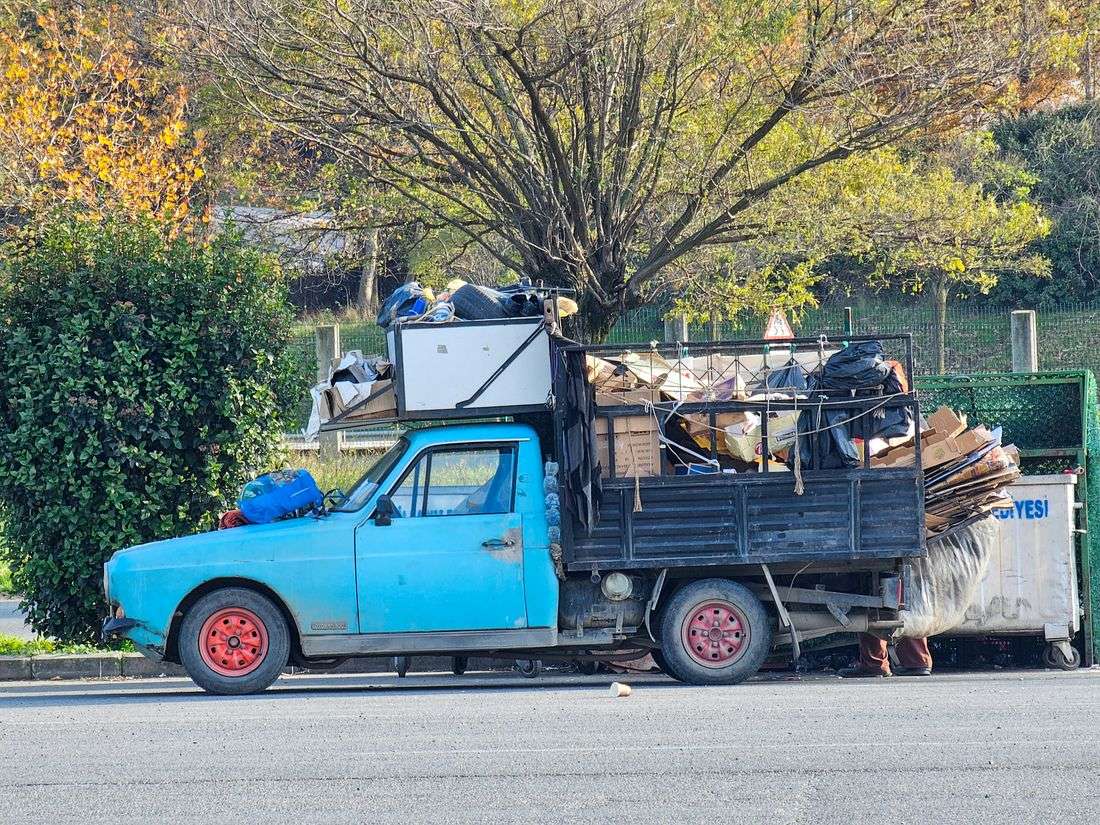
Using a convenience center requires a Wilson County vehicle tag, since the centers serve county residents rather than the general public. Beyond that, the practical limit is your vehicle. Storm debris is bulky, heavy, and often sharp, and clearing a real storm-blown yard can mean a dozen trips in a pickup or, worse, carloads in a sedan with the seats down and a tarp protecting the interior. Each run means loading, driving, unloading, and returning, and the volume from even a moderate storm adds up fast.
A junk-removal hauler inverts that math. Instead of you making repeated trips, the truck comes to the property, the crew loads from where the debris sits, and a storm-blown yard is typically cleared in a single visit. The vegetative and construction streams you separated get routed to the correct destinations without you sorting it out at a gate. For a yard buried after a Middle Tennessee storm, the trade is your time and your vehicle against a single scheduled pickup.
Timing, Access, and Documenting for Insurance
Order matters in a storm cleanup, and a little sequencing saves a lot of doubling back.
Clear access lanes first. Before hauling anything off the property, open up the driveway, the path to the front door, and any route emergency vehicles or repair crews might need. A clear lane also makes the eventual haul-out faster, because nothing has to be moved twice.
Document before you haul. If you intend to file an insurance claim, photograph the damage and the debris thoroughly before any of it leaves. Once a pile is gone, it is gone, and an adjuster cannot assess what they cannot see. Time-stamped photos of the fallen tree, the damaged fence, and the roof material on the ground protect you if questions come up later.
Then sort and stage. With access open and damage recorded, separate the streams as described above and stage them where a truck can reach them. That is the point where a single haul-out clears everything at once.
Clearing a Storm-Blown Yard in One Visit
Once the photos are taken and the streams are separated, the cleanup itself does not have to drag on for weeks. A hauler can clear a storm-blown yard in Mount Juliet, and across Wilson County, in a single visit, taking the snapped limbs and brush along with the torn fence panels and roofing material in the same stop. Our yard waste removal service handles the vegetative side, and construction debris removal covers the fencing, shingles, soffit, and siding the wind tore loose.
If a storm has left your yard buried and you would rather not spend the next several weekends loading a truck, call (615) 701-6608 to talk through the cleanup. We work throughout Mount Juliet and the surrounding Wilson County communities, and we can clear what the weather left behind so you can get back to normal.